Who Gets Grandma's China? Dividing Belongings Without Dividing the Family
Published:
The small stuff causes the biggest fights
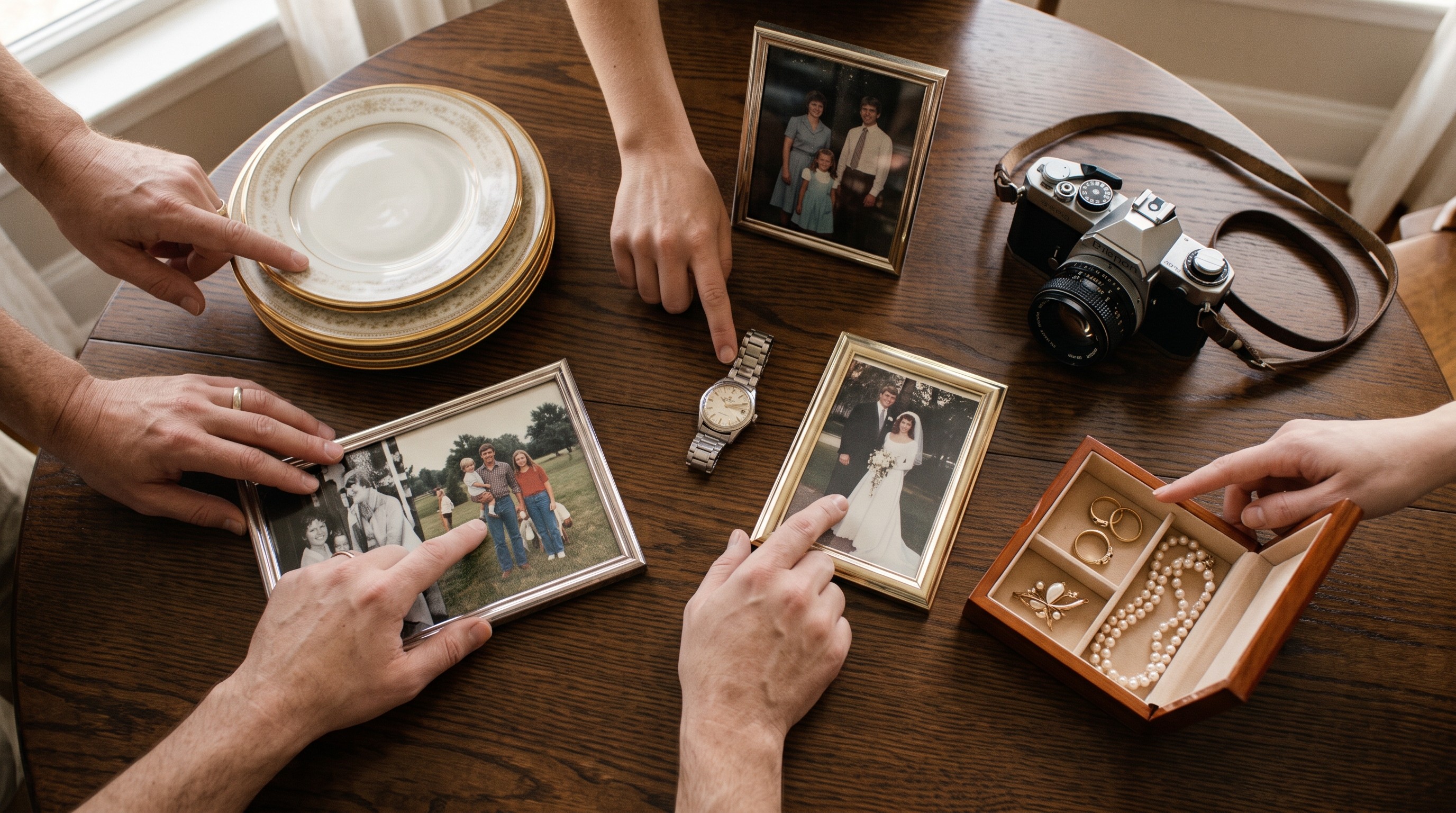
Ask any estate attorney or senior move manager and you'll hear the same thing: families rarely fall apart over the bank accounts. They fall apart over the recliner, the cast iron skillet, the wedding photos and the china nobody has used since 1994.
Money divides cleanly. Memories don't. Two siblings can both have a real claim to the same kitchen table because they both grew up eating at it.
A recent Realtor.com report on the Post-it note inheritance trend shows how high the stakes can get. It points to a Trust & Will survey in which 17% of people said an inheritance permanently damaged a family relationship, and another 17% said it caused tension the family eventually recovered from. One estate attorney in the piece described families spending months arguing over a recliner while the family business sat untouched.
If you're an executor, or one of several adult children sorting through a parent's home, here's a practical way to divide belongings that keeps the process fair, transparent and as calm as possible.
1. Start with what the documents say
Before anyone picks anything, read the will, any trust and any signed list of personal property. Specific gifts named there come first. A sticky note, a text message or a promise made at the dinner table may not be legally binding, even if everyone remembers it. If something is unclear, ask the estate attorney before items start leaving the house.
2. Take inventory before anything moves
Walk the home room by room and document everything of meaning or value: a photo, a short description, its condition and where it was found. Do it before the first box gets packed. A complete inventory protects the executor, answers "what happened to Dad's watch?" before it's asked, and gives everyone the same picture of what's there.
3. Separate sentimental value from market value
Most household items are worth far more to the family than on the open market. A few may be the opposite. Get professional appraisals for jewelry, art, antiques, collections and anything else that could be valuable, so no one unknowingly walks away with a much larger share.
4. Agree on a fair way to choose
Pick the method before anyone looks at the list, so the rules don't feel designed around a particular item. Common options include:
Rotating picks. Draw names for order, then take turns choosing one item at a time, reversing the order each round.
Points or tokens. Each heir gets the same number of points to spread across the items they care about most.
Equalize by value. If one person takes a higher-value item, the difference is balanced out of the estate's cash or other assets.
Sell and split. Anything nobody wants, or that two people can't agree on, is sold and the proceeds divided.
5. Write down every decision
Record who received each item and when. Share the list with every heir. Transparency is the single best defense against hurt feelings later, and it gives the executor a clean record for the final accounting.
6. Don't overlook the less obvious assets
It's easy to spend weeks on furniture and forget the things that matter more financially: a family business, intellectual property, vehicles, digital accounts and photos stored online. These often have their own rules and paperwork, so flag them early with the attorney.
7. Bring in help when you need it
An estate attorney can answer legal questions. An appraiser can settle value questions. A senior move manager or estate liquidator can handle sorting, packing and selling what's left. A neutral third party often lowers the temperature in the room.
A clear record keeps the peace
Dividing a loved one's belongings is emotional work layered on top of grief. You can't take the emotion out of it, but you can take out the confusion: what's in the house, what it's worth, who wants it and who ended up with it.
That's what SaveOr is for. Families, executors and the professionals who support them use SaveOr to build a photo inventory of the home, organize items by room, add notes and values, and work through distribution in one shared place. Everyone sees the same list, every decision is recorded, and nothing depends on a sticky note staying put.
Settling an estate? See how SaveOr helps families divide belongings fairly.
This article is for general information only and is not legal advice. Talk with an estate attorney about your specific situation.
Sources
The Post-it Note Inheritance Trend, and the Family Fights It Can Leave Behind, Realtor.com via Yahoo Finance, October 6, 2026
Author: Matthew Scola
Co-Founder and CEO of SaveOr, an AI-powered home inventory and estate documentation platform helping homeowners, estate executors, and senior move managers document, organize, and settle homes with less stress.