Best Home Inventory Apps for Organization, Estate Planning, Moving, and Insurance
Between furniture, electronics, jewelry, and everyday belongings, the average home holds thousands of items. Here's an honest look at the leading apps in 2026 — what each does well, and how to pick the one that fits your needs.

1 in 3
Homeowners who file insurance claims receive less than a full payout
The Case For a Home Inventory
SaveOr
Best for families, estate planning & life transitions
Key Features
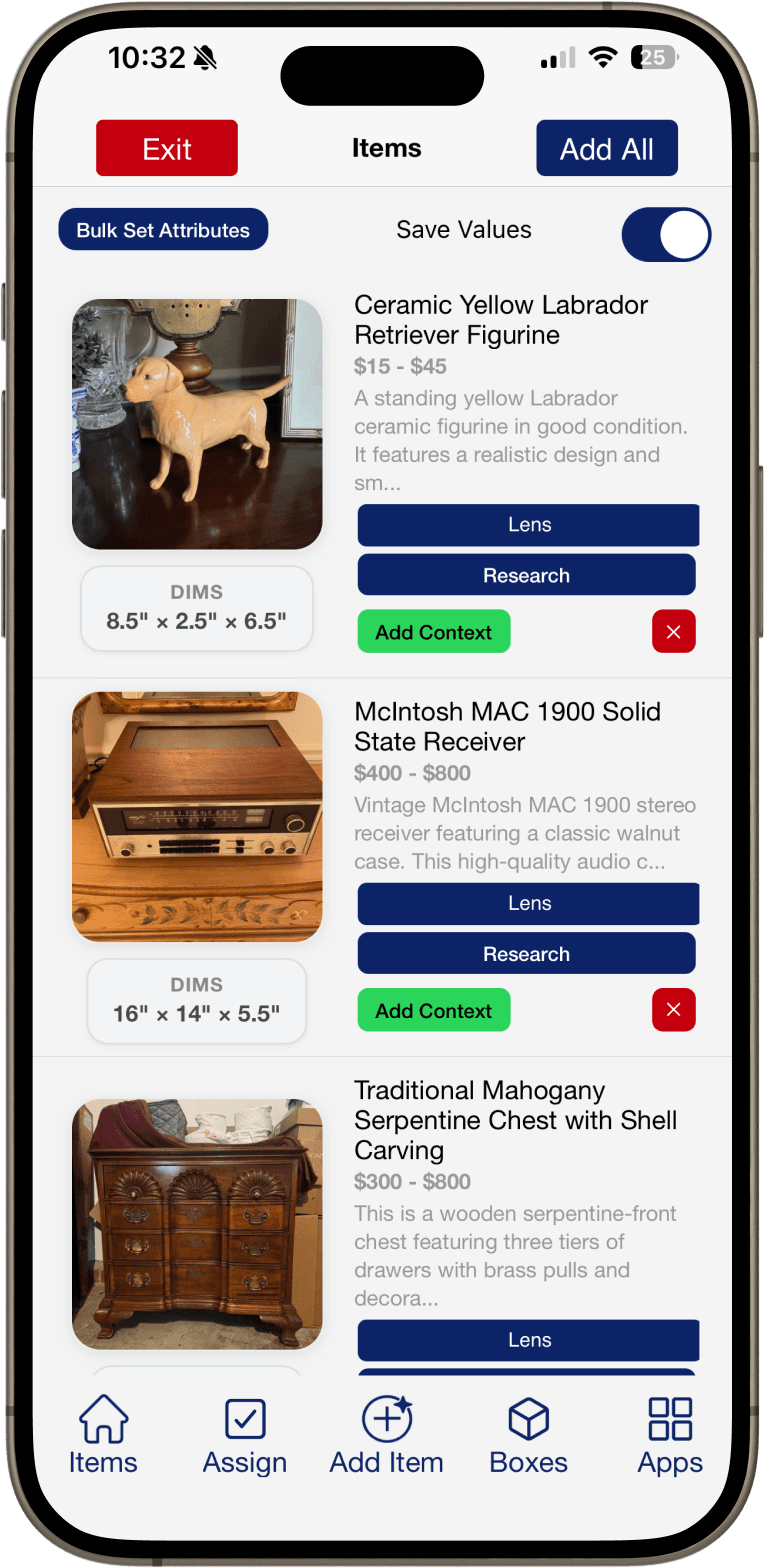
A modern inventory platform built for the moments that matter most — downsizing, estate planning, moving, and insurance. Where most apps stop at documentation, SaveOr captures the stories and significance behind items alongside their value.

AI item ID from photos
Value estimates
Mobile & web
Fast bulk entry
Family collaboration
Personal Property Memorandum
Room & category
Insurance & estate reports
QR & moving-box links
BEST FOR
Families preparing for estate planning or probate, anyone managing a downsizing project, homeowners who want complete insurance documentation, and professionals managing inventories for clients.
Best for business-focused organization
Key Features
A widely used platform originally built for small-business stock that's expanded into home use. Strong folder organization, barcode scanning, and custom fields — the pick for people who prefer structured manual entry over AI automation.

Barcode & QR scanning
Photo storage
Folder organization
Basic reporting
Custom fields
BEST FOR
Users who prefer structured organization and hands-on tracking.
Full 1v1 Comparison
HomeZada
Best for whole-home management
Key Features
Combines inventory with broader home management — maintenance schedules, renovation budgets, property-value tracking, and financial summaries. Its newer AI photo recognition has improved noticeably.

Maintenance tracking
Property-value tracking
AI photo recognition
Financial summaries
Inventory lists
BEST FOR
Homeowners who want to track the home as an asset, not just its contents.
Full 1v1 Comparison
Best for simple documentation
Key Features
A straightforward inventory and warranty-tracking app with a clean interface and easy photo entry. The right call for anyone who wants the simplest possible solution without advanced features.

Photo-based inventory
Purchase info storage
Full 1v1 Comparison
Warranty tracking
Simple interface
BEST FOR
Families preparing for estate planning or probate, anyone managing a downsizing project, homeowners who want complete insurance documentation, and professionals managing inventories for clients.
Itemtopia
Best for structured asset tracking
Key Features
Covers household belongings, collections, and assets with custom fields, reminders, and family sharing. More structured than Nest Egg, less specialized than SaveOr for estate and legacy use cases.

Item tracking & categories
Family sharing
Document & receipt storage
Maintenance reminders
BEST FOR
Families preparing for estate planning or probate, anyone managing a downsizing project, homeowners who want complete insurance documentation, and professionals managing inventories for clients.
Full 1v1 Comparison
NAIC
Good Free Option that Set the Standard
Key Features
Covers household belongings for insurance purposes with barcode scanning.
Item tracking & categories
Insurance Exporting
Barcode Scanning
BEST FOR
Homeowners and renters looking for a cheap option to document and manage their items for free.
Full 1v1 Comparison
Vorby
Best for structured asset tracking
Key Features
A newer AI-driven inventory app focused on removing manual entry. Photo recognition, email receipt scanning, and voice search set it apart from manual tools. Strong for day-to-day organization though it has no bulk-entry workflow for documenting a full home quickly.
AI item ID from photos
QR & NFC tags
Siri / Alexa voice search
Email receipt parsing
BEST FOR
Homeowners and renters who want an automated way to catalog their home for everyday organization or insurance — not built for estate, probate, downsizing, or whole-house documentation at scale.
Full 1v1 Comparison
The Best Home Inventory Apps
Five tools that cover most needs — from estate and legacy work to simple warranty tracking.
FAQ
Common questions
How long does it take to create a home inventory?
Deadlines vary by state, but most courts require a filed inventory within 60 to 90 days of an executor's appointment. Because locating and valuing personal property is the slowest step, starting the documentation early is the best way to meet the deadline.
How long does it take to create a home inventory?
Not always — but having one makes claims much easier and often results in faster, fuller reimbursement.
Can I use a spreadsheet instead?
You can, but spreadsheets require manual entry and usually lack photo storage and reporting tools, so they tend to stay incomplete and take significantly longer to create than using an inventory app.
How often should I update my inventory?
Once or twice a year is typically enough, plus an update whenever you make a major purchase.
Start with SaveOr today
Start Today
Book a Call
How it Works
Book a Call
Sign up for SaveOr and feel the peace of mind that comes from knowing your belongings are documented, valued, and protected.
