Döstädning, made gentler
Swedish death cleaning means deciding what stays, what goes, and who gets what, while you are here to say why it matters. SaveOr gives you one place to photograph your things, record their stories, determine their next destination, and share the plan with your family.
4.9 rating on the App Store
Loved by families and move managers

Every item, with its story
So your family knows what matters and why
Swedish death cleaning, or döstädning, combines the Swedish words for ‘death’ and ‘cleaning.’ Popularized by the late Margareta Magnusson in her 2017 book, it is the practice of sorting your belongings over time so your loved ones are not left to do it for you.[2] Despite the name, it is not grim. It is an ongoing habit of keeping what is useful or meaningful, passing things on while you can see them enjoyed, and letting the rest go.[3]
Why Start Now?
49%
of Americans would rather inherit nothing than sort through a relative’s belongings [1]
56%
who cleared out a loved one’s home said the volume of stuff made it harder to grieve [5]
5x
Personal items are five times more likely than money to cause family conflict [6]
60%
don’t want family sorting their things later, yet many have never said what they want [7]
Where Swedish Death Cleaning Comes From
Sorting through your belongings late in life is not new, but the practice got a name in 2017, when döstädning was added to the Swedish Language Council’s list of new words.[2] That same year, artist Margareta Magnusson, who described herself as somewhere between 80 and 100 years old, published The Gentle Art of Swedish Death Cleaning. She had cleared out homes for people she loved before she ever started on her own, and she wrote from that experience.
The book became a bestseller and inspired a 2023 Peacock series produced by Amy Poehler, in which three Swedish experts help Americans part with their things.[2] Magnusson died in March 2026, but her central idea has outlasted her: the kindest thing you can leave your family is clarity.
Her approach is unsentimental about objects and deeply sentimental about people. She suggested asking one simple question of each thing you own: would anyone I know be happier if I kept this?[9] If the answer is no, it can probably go. If the answer is yes, the next step is making sure that person knows it is meant for them.
SaveOr’s Home Inventory App makes Swedish death cleaning simple
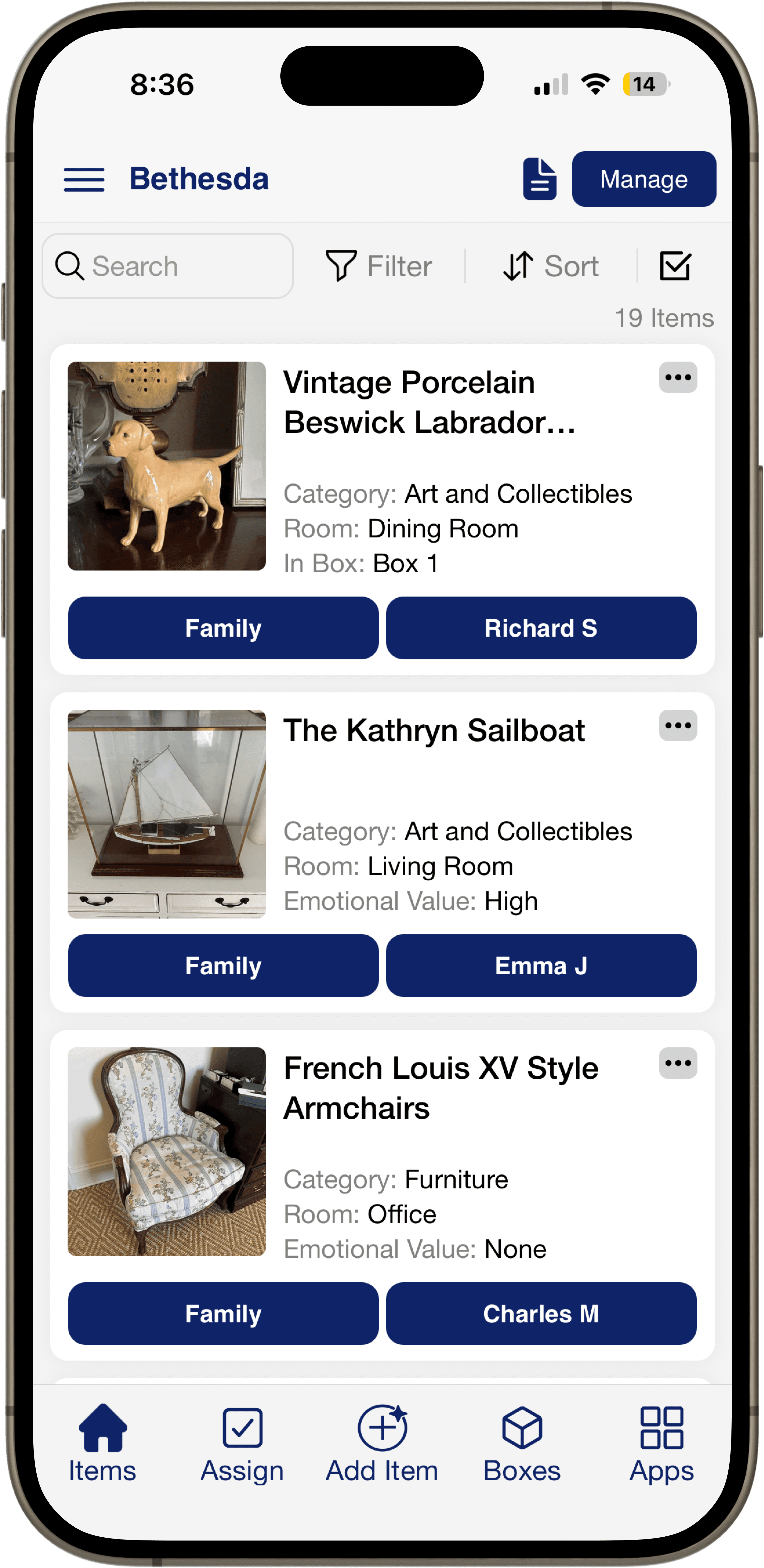
Death cleaning asks you to take inventory, make decisions, and share them. SaveOr is built for all three.

Where to Start: A Room-by-Room Order
Gerontologist David Ekerdt, who studies how older adults downsize, found the challenge is as much about sheer volume as sentiment.[4] The trick is to build momentum on the easy rooms before you reach the hard ones.
01
Closets and clothing
Start here. Clothes carry little family meaning, so decisions are fast. Keep what you wear, donate what you don’t, and log any pieces with a story, like a wedding dress or a uniform.
02
Kitchen and dining room
Most homes hold more dishes than anyone uses. Keep the everyday set, photograph the china and serving pieces, and ask family before donating anything with a history.
03
Garage, basement, and attic
These spaces hold the most forgotten volume. Work in short sessions, set aside tools and equipment someone could use, and log anything worth selling.
04
Books, collections, and furniture
Books are among the possessions people find hardest to let go.[11] Furniture is a big question for heirs who may not have the space, so check their interest early before you plan a sale or donation.
05
Paperwork and digital accounts
Shred what you no longer need, gather important documents in one safe place, and tell your family where to find them.[3] Make a list of digital accounts too, so nothing important is lost.
06
Photos and keepsakes
Save these for last, as Magnusson recommended.[9] Choose the photos that tell your story, label who is in them, and write down the memories behind each keepsake.
How SaveOr Simplifies Swedish Death Cleaning
Death cleaning is a habit, not a weekend project. Here is a gentle way to start, and to keep going.
Step 1: Start small, not sentimental
Begin with a closet or a bookshelf, not photo albums. Magnusson warned that starting with keepsakes gets you stuck in memories before you have made any progress.[9] Create your inventory in SaveOr, pick one room, and give yourself a short, specific goal, like one shelf in one afternoon. Small wins build the habit.
Step 2: Photograph what you keep and what you pass on
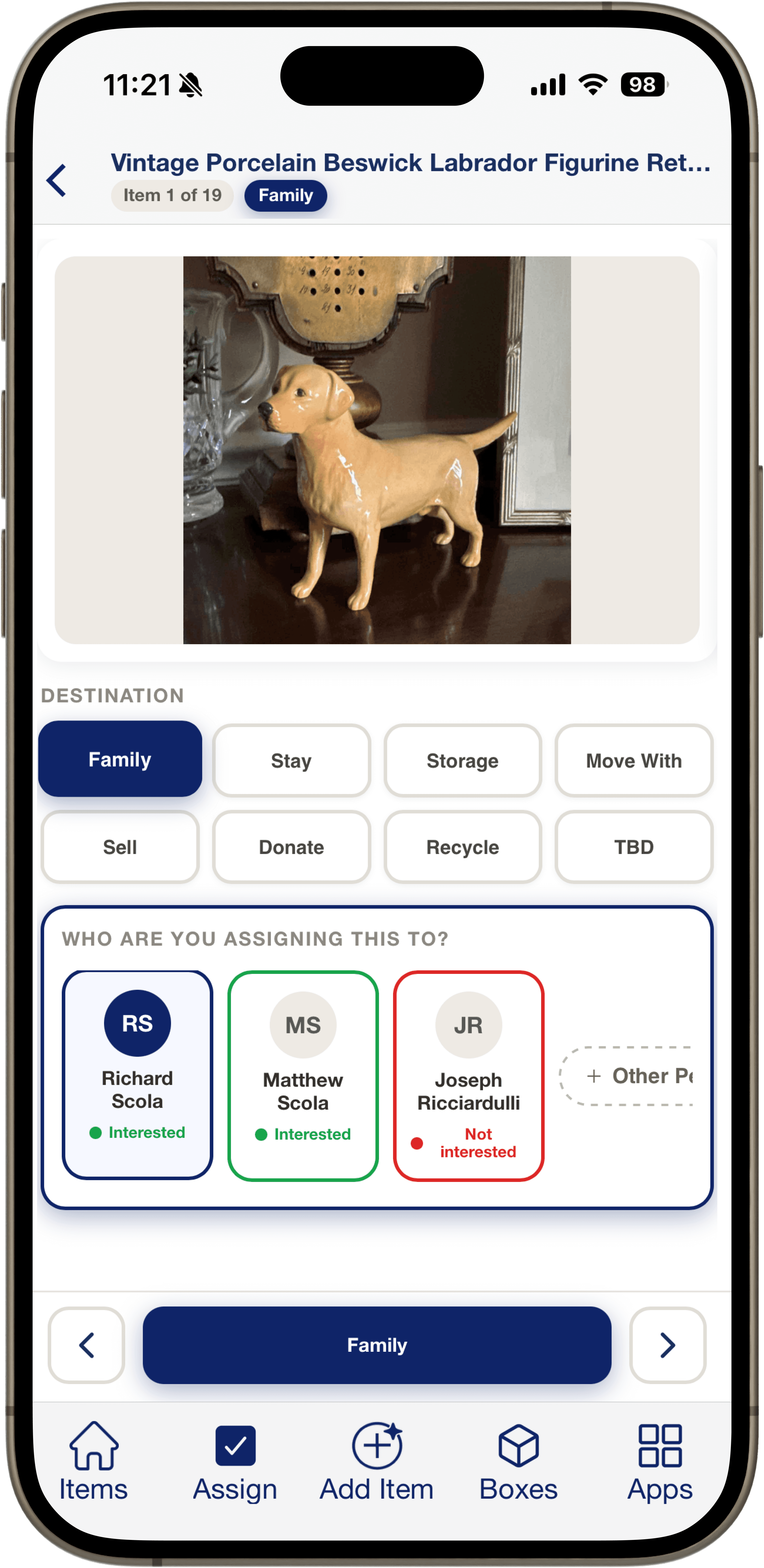
Take one clear photo per item. SaveOr fills in the name, category, and an estimated value, so the list builds itself as you go. You don’t need to photograph everything you are tossing, only the things you are keeping, giving, selling, or donating.
Step 3: Write down the why
A sentence or two is enough. Where did it come from? Who gave it to you? Who should have it next? These notes are often what heirs treasure most, and they are impossible to recover once the person who knew them is gone.
Step 4: Ask your family what they would actually like
Their answers may surprise you. Many adult children want only a handful of meaningful pieces, not a houseful of furniture.[1] Invite them to the inventory and let them share their picks, so you can plan around what people really want.
Step 5: Make it official
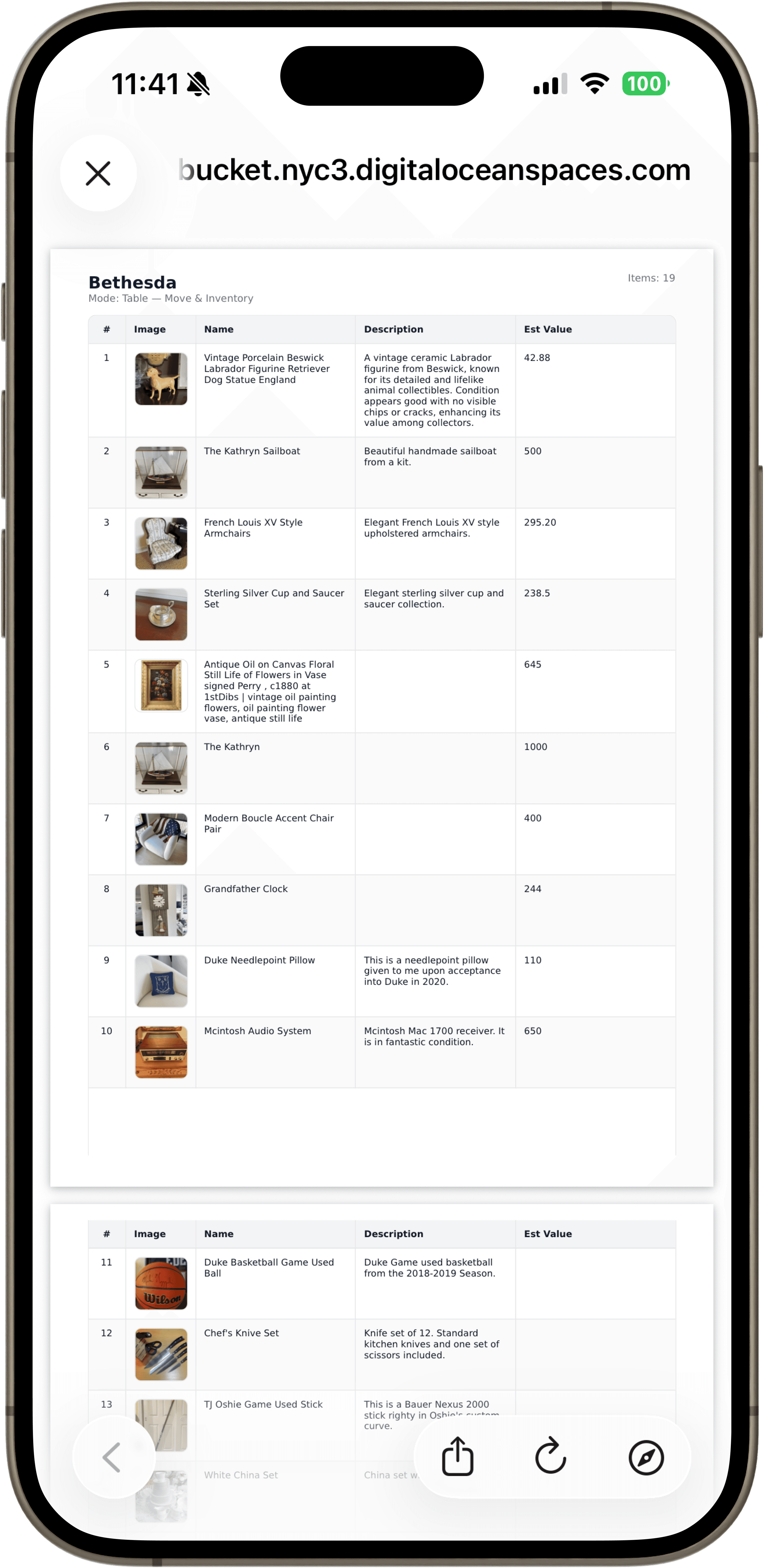
Talk with your estate attorney about a personal property memorandum, a list of specific items and who should receive them. SaveOr generates a draft from your inventory, so your attorney starts with a complete, photo-backed record instead of a blank page.[8]
Step 6: Revisit once a year
Death cleaning is meant to be ongoing.[3] Pick a yearly date, like a birthday or the first week of spring, to walk through the house again. Your SaveOr inventory stays current as you add, give away, or donate items.
How to Bring Up Death Cleaning With Your Parents
Many adult children find this page first. A parent’s house is full, and nobody has said out loud what should happen to it all. In the 2026 Great Junk Transfer study, 42% of people who don’t want to inherit belongings said they had never told their family.[7] These approaches make the conversation easier to start.
Lead with their wishes, not your burden. Ask which things matter most to them and who they hope will have them.
Pick a calm moment. A quiet afternoon works better than a holiday dinner with the whole family at the table.
Start with one room. A single closet feels finite. The whole house feels like an ending.
Offer to take the photos. Many parents enjoy telling the stories while someone else handles the phone. You add the item in SaveOr, they add the memory.
Include siblings who live far away. A shared inventory lets everyone weigh in without scheduling a family meeting.
Bring in help when it gets heavy. Senior move managers guide families through this every day, and many already use SaveOr with their clients.
For move managers and estate professionals
You already guide clients through this. SaveOr gives you a professional inventory to hand off, a clear record of decisions, and an easy way to bring adult children in from across the country. The per-inventory fee can be passed through to your clients.
Become a SaveOr Partner →
The hardest part is the sentimental things
The items that cause the most tension are rarely the most valuable. A $2 teacup can matter more than anything else in the house when it carries the memory of a person.[10]
SaveOr was founded in 2020 after our own family struggled to divide a grandparent’s belongings during a downsizing, and nearly everything ended up discarded instead of passed on. We built SaveOr so every family can keep the stories and share the things, without the arguments.
Frequently Asked Questions
What does Swedish death cleaning mean?
At what age should I start?
Is Swedish death cleaning morbid?
What should I do with sentimental items?
How is this different from decluttering?
Does a list of who gets what have legal weight?
Can my family help from far away?
Do I have to get rid of everything?
Can I death clean for a parent?
How long does Swedish death cleaning take?
What should I do with paperwork and digital accounts?
