Estate Sale Advertising: How to Get Buyers Through the Door
Published:
Introduction
A beautifully staged, carefully priced estate sale doesn't matter much if no one knows it's happening. Advertising is the step that determines turnout — and turnout, more than almost anything else, determines how much of your priced inventory actually sells.
This guide covers exactly where to advertise, what to include, and the timeline that consistently produces the strongest turnout for DIY sales.
The Advertising Timeline
Start your advertising push three to four weeks before the sale date to build maximum interest. This isn't arbitrary — serious estate sale shoppers, including dealers, collectors, and regular attendees, often plan their weekends around sales they've seen advertised in advance. A sale advertised only a few days out misses this audience almost entirely.
3–4 weeks out: Initial listing on estate sale platforms, with a general description and a few preview photos of standout items
2 weeks out: Social media posts, expanded photo coverage of notable pieces, neighborhood posting if relevant
1 week out: Final reminder posts, complete listing details (exact address, hours, payment methods), physical signage prepared
Day before / morning of: Signage placed at key intersections leading to the sale, final reminder posts on social platforms
Where to List Your Sale
Dedicated estate sale platforms
Sites like EstateSales.net and EstateSales.org are the primary channels serious estate sale shoppers actually use to find sales in their area. These platforms reach an audience specifically looking for estate sales — a meaningfully different and more relevant audience than general classifieds. Listings typically allow multiple photos, a description, and specific sale dates and times.
Facebook Marketplace and local groups
Local community Facebook groups and Marketplace listings reach a broader, more local audience, including people who might not specifically search estate sale platforms but live nearby and would attend if they saw it. Posting in multiple relevant local groups (neighborhood groups, town/city community groups, local buy-sell-trade groups) extends reach beyond a single platform.
Craigslist
Still actively used in many markets for estate sale listings, particularly for reaching local bargain-focused shoppers and dealers who specifically monitor Craigslist for sales.
Neighborhood and yard signage
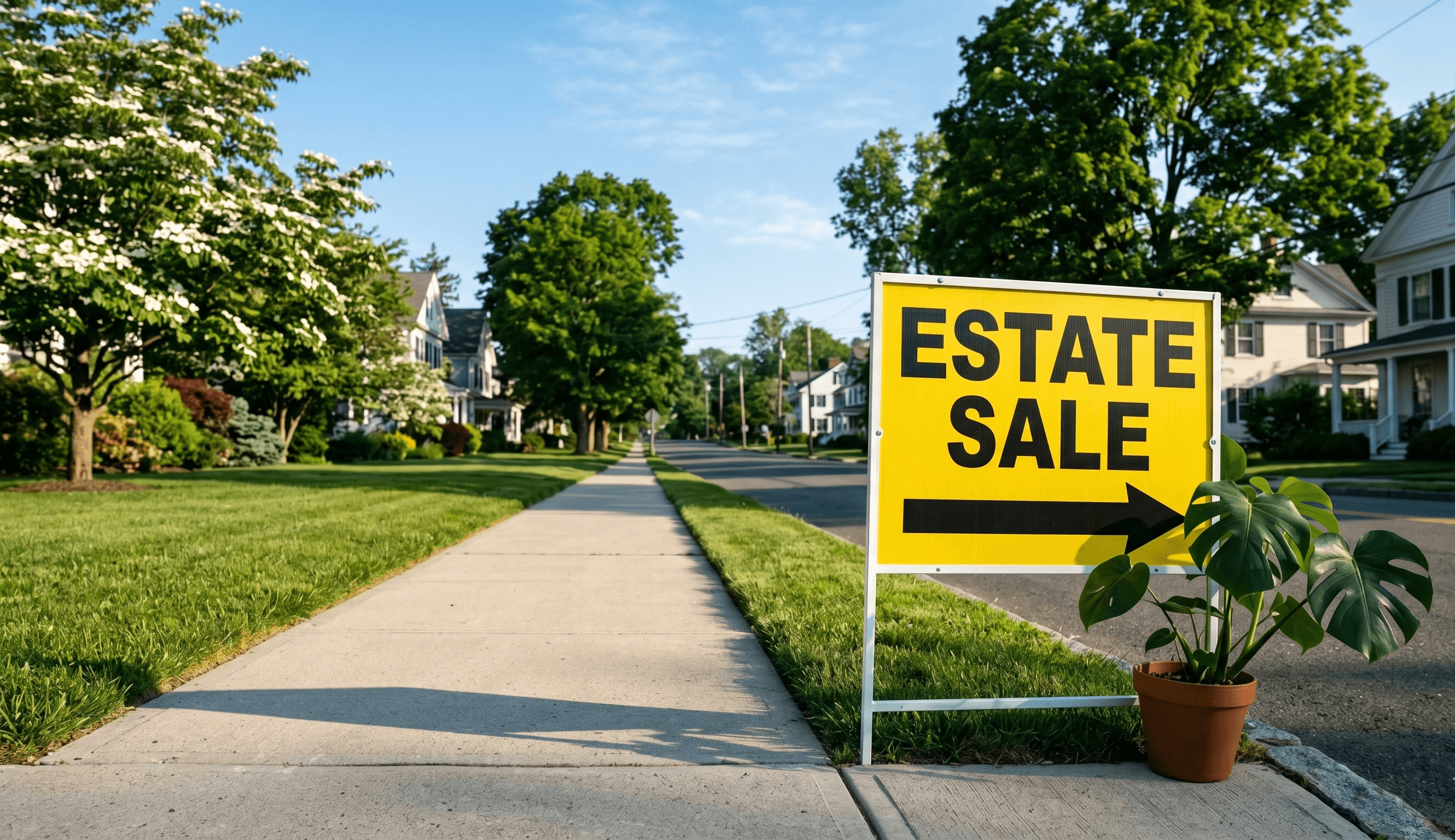
Physical signage matters more than people expect. Bright colors, large readable text, a clear arrow, "ESTATE SALE" prominently visible, with the address and dates if space allows. Place signs at the entrance to the neighborhood and at key turns leading to the home — not just at the home itself. A meaningful percentage of estate sale attendance comes from people who notice signage while driving through the area, with no advance planning at all.
Using Photos Effectively
Photos are the single biggest factor in whether someone clicks into your listing and decides it's worth attending. A handful of principles make a measurable difference:
Lead with your most visually interesting or highest-value items — furniture, art, notable collectibles — not a generic shot of a cluttered garage
Use natural light and a clean background — photos taken in a staged, well-lit room look dramatically more appealing than the same items photographed in a dim or messy space
Include multiple angles for furniture and larger pieces
Show scale where it matters — a ruler or a familiar object next to smaller collectibles helps buyers gauge size accurately
Update your listing with new photos as the sale date approaches to keep it appearing fresh in platform search results
If you documented your home with SaveOr ahead of the sale, you already have a library of clean, organized photos for every item — pull directly from that inventory rather than re-photographing items specifically for advertising. This is one of the more underappreciated efficiencies of documenting before staging: your inventory photos double as your marketing material.
Writing the Listing Description
Effective estate sale listings are specific, not generic. "Household items, furniture, miscellaneous" tells a potential buyer nothing and gives them no reason to prioritize your sale over others happening the same weekend. Instead:
Name specific standout categories or items: "Mid-century modern furniture, vintage Pyrex collection, power tools, antique writing desk"
Mention any notable brands or makers if known
Include practical details: exact address, dates and hours, payment methods accepted (cash, card), whether early arrivals or numbered lists are used for opening
Set expectations on negotiation if relevant — many buyers appreciate knowing in advance whether prices are firm or negotiable
Multi-Day Sales and Discount Strategy in Advertising
If your sale runs multiple days, say so clearly in your advertising, and consider noting any planned discount schedule (for example, "Day 2: everything 25% off"). This serves two purposes: it draws bargain-focused shoppers specifically to the discount day, and it sets expectations so first-day shoppers understand that waiting carries some risk of items selling before the discount kicks in — which can actually accelerate first-day sales from buyers who don't want to risk losing something they want.
The Week-Of Checklist
Confirm all listings show the correct final address, dates, and times
Post a final reminder across all social channels used
Prepare physical signage — have it ready to place the evening before or early morning of the sale
If using numbered entry or early-bird policies, communicate this clearly in your final advertising push
Have a plan for managing a potential line or early crowd if the listing has generated strong interest
How SaveOr Supports Your Advertising Effort
Beyond providing the photo library your advertising will draw from, your SaveOr inventory gives you the specific, organized item list that makes for a strong, detailed listing description — rather than vague references to "furniture and household items." Knowing exactly what's in the sale, organized and priced, means your advertising can be specific and compelling from the very first post.
Build your photo-ready inventory with SaveOr. Try it at at app.saveor.com or learn more about our solutions at saveor.com/estate-sale-valuation.
Conclusion
Pricing and staging determine how much buyers are willing to pay once they're in the door. Advertising determines whether they show up at all. Starting three to four weeks out, using multiple channels — dedicated estate sale platforms, social media, and physical signage — and leading with strong, specific photos consistently produces the best turnout for DIY sales.
None of the careful pricing and staging work in the rest of this guide matters if the sale is quiet. Advertising is where that effort actually converts into buyers, and buyers are where it converts into money for the estate.
Author: Matthew Scola
Co-Founder and CEO of SaveOr, an AI-powered home inventory and estate documentation platform helping homeowners, estate executors, and senior move managers document, organize, and settle homes with less stress.