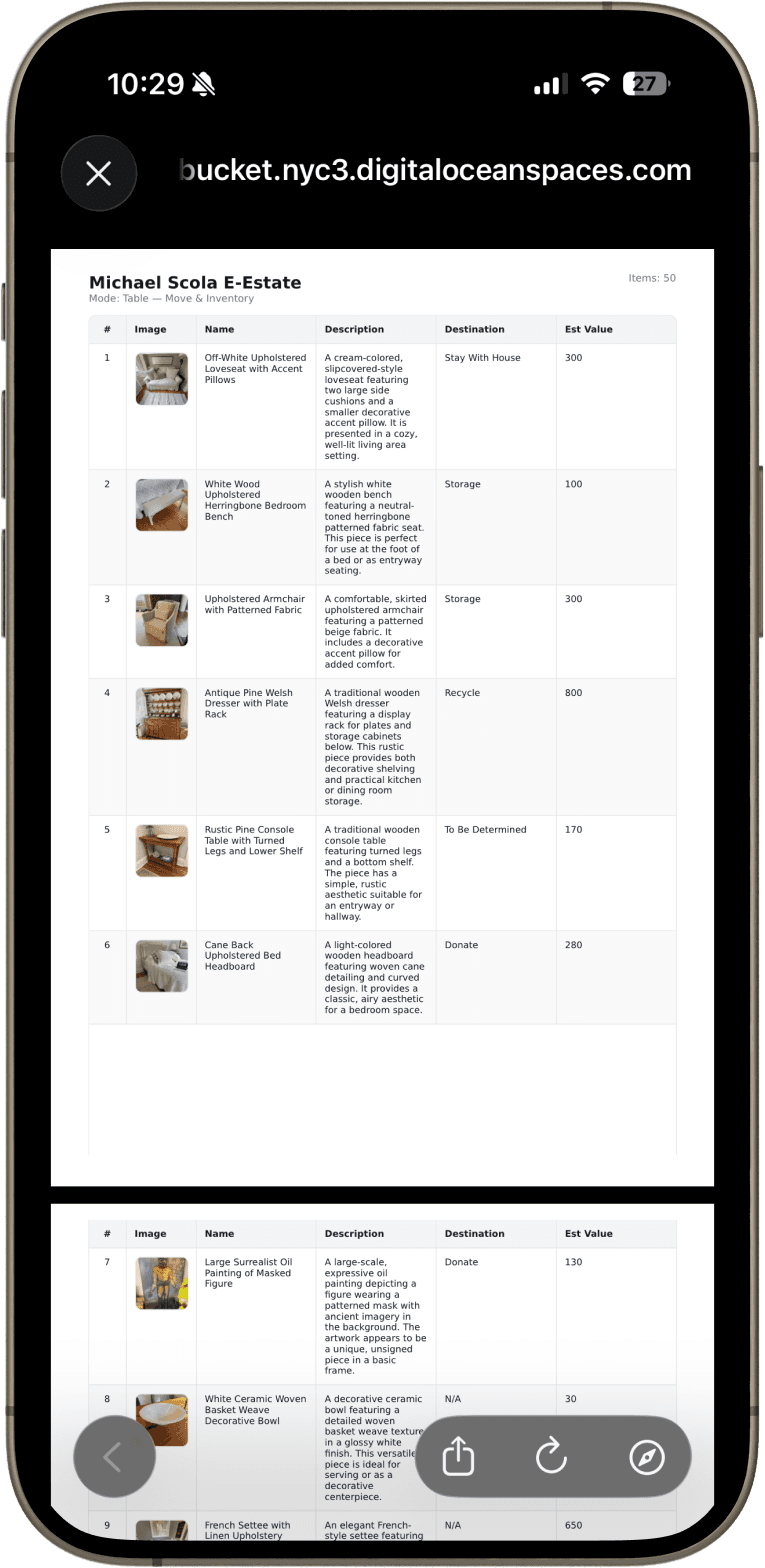
Most courts require a filed inventory within 60–90 days. SaveOr lets you photograph an entire estate room by room and export a court-ready report — without spreadsheets, guesswork, or billable attorney hours spent on data entry.
You're responsible for everything — and the clock is running
The Executor's Burden
Being named executor means a legal duty to locate, document, value, and account for every asset in the estate. The personal property — furniture, jewelry, collections, household goods — is usually the hardest part and the most disputed.
Most jurisdictions require a complete inventory filed within 60–90 days of appointment. Missing it can mean penalties or removal.
You must show the court and beneficiaries an accurate, defensible record. Every item needs a description and a fair-market value.
Tangible property triggers the most disputes. A shared, transparent inventory keeps disagreements out of court — and off your shoulders.
From appointment to filing, in four steps
How it Works
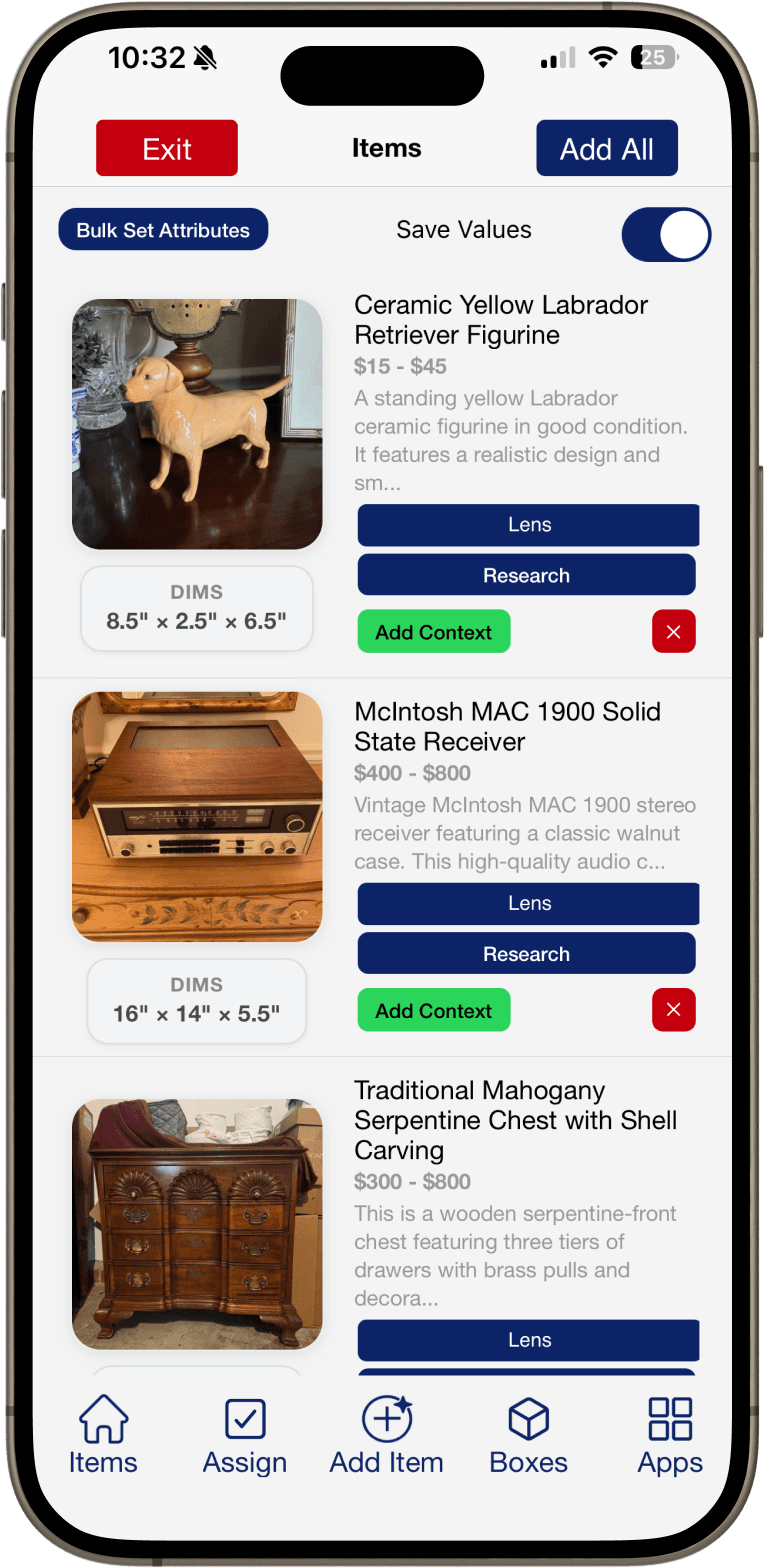
Walk the home with your phone. SaveOr's AI identifies each item and assigns a category, location, and estimated fair-market value automatically.
Photograph furniture, jewelry, art, collections, and household goods
AI fills in descriptions and values — no manual data entry
Organize by room so nothing is missed
Document the estate room by room
SaveOr surfaces items that may need a licensed appraiser, so you know where professional valuation is worth the cost.
AI value estimates based on comparable market data
High-value items flagged for appraiser review
Keep appraisals attached to the item record
Flag high-value items for appraisal
Everyone sees the same live inventory with the permissions you set — resolving questions before they become disputes.
Role-based access for co-executors, CPAs, and heirs
Beneficiaries can view and declare interest in items
Every change is timestamped for a clean audit trail
Give co-executors and beneficiaries access
Export a court-ready inventory and file
FAQ
Common questions from executors
How long does an executor have to file an estate inventory?
Deadlines vary by state, but most courts require a filed inventory within 60 to 90 days of an executor's appointment. Because locating and valuing personal property is the slowest step, starting the documentation early is the best way to meet the deadline.
How do I value personal property for probate?
Probate inventories use fair-market value — what an item would sell for at the date of death. SaveOr provides AI estimates from comparable market data for routine items and flags high-value pieces such as jewelry, art, or collections that may warrant a licensed appraiser.
What should be included in an estate inventory?
An estate inventory lists the decedent's assets with descriptions and values: real estate, financial accounts, vehicles, and tangible personal property such as furniture, jewelry, and household goods. SaveOr focuses on the tangible personal property that is hardest to document and most often disputed.
Can co-executors and beneficiaries use the same inventory?
Yes. You control role-based access, so co-executors, accountants, and beneficiaries can view the same live inventory. Beneficiaries can declare interest in items, which helps resolve disagreements before they reach the court.
