Quick Answer
To divide an estate fairly among siblings, start with a complete photo inventory of everything in the home, get objective value estimates instead of guessing, let each sibling privately flag what they want, then resolve overlaps with equal shares, a buyout, or selling and splitting the proceeds.

Start With Open, Early Communication
Most estate conflicts don’t start over money — they start over silence. Talk candidly with your siblings early about expectations, concerns, and how you want to approach dividing things up. It feels uncomfortable, but naming the process out loud, before anyone has touched a single box, prevents most misunderstandings later.
Build a Complete Inventory Before Anyone Divides Anything
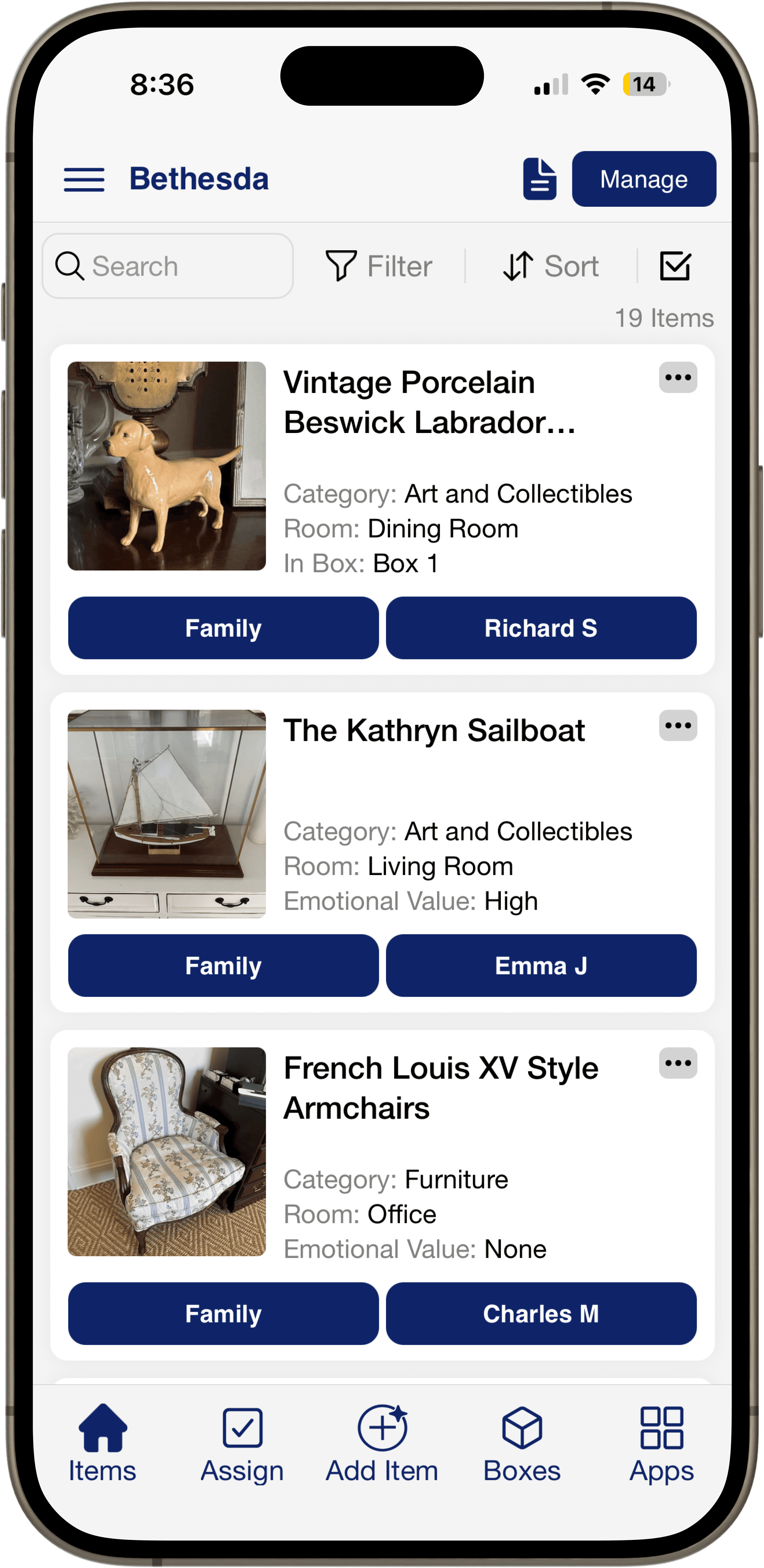
Before any conversation about who gets what, everyone needs to see the same list. Walk through the home and photograph everything — furniture, jewelry, art, collectibles, and everyday items. SaveOr’s AI catalogs each item automatically, so within a couple of hours you have a complete, shared inventory instead of a room-by-room argument.
Get Objective Value Estimates, Not Guesses
“Equal” is impossible to agree on if no one knows what things are actually worth. As you photograph each item, SaveOr’s AI provides an instant estimated value based on comparable listings, giving every sibling the same objective starting point. For especially valuable pieces — real estate, fine art, significant jewelry — pair this with a professional appraisal.
Let Preferences Be Known — Privately, Before Anyone Speaks
Whoever asks for an item first often gets it by default, which breeds resentment even when no one intended to steamroll anyone else. Let each sibling privately flag what they’d like to keep in SaveOr before any group conversation happens, then reveal preferences at the same time. It sounds small, but removing the first-mover advantage resolves a surprising share of sibling conflict.
Choose a Distribution Method: Equal Shares, Buyout, or Sell and Split
Once everyone’s preferences and the item values are on the table, pick a method for anything more than one person wants. Equal-value distribution divides items so each sibling ends up with roughly the same total worth. A buyout lets one sibling keep a big item — often the family home — by compensating the others for their share. Selling and splitting proceeds works well when no one wants to manage physical items or when the group simply can’t agree on who should have what.
Put It in Writing
Keep a record of who agreed to what, what each item was valued at, and how decisions were made. Estate settlement can stretch on for months, and memories of a verbal agreement fade fast. Export a report from SaveOr showing the full inventory, values, and assignments — it becomes the reference everyone can point back to if a question comes up later.
When to Bring In an Attorney
If discussions stall or a disagreement turns serious, a neutral estate attorney can mediate using the same documented inventory and values instead of starting from scratch. This is especially worth doing early in blended families or already-strained relationships — see our guide on contentious estates for how to plan ahead when conflict is likely.
Related Reading
If you’re also clearing out and downsizing the home itself, see our downsizing guide. For the broader picture of inheriting and dividing a parent’s belongings, read our guide on millennial inheritance. And if you’re deciding what to keep versus sell first, start with how to sell unwanted stuff.

Related
Browse the topic hubs →
Know what you have. Know what to do with it.
SaveOr catalogs your belongings with AI, estimates what they’re worth, and helps you decide what to keep, sell, donate, or pass on.
