How to Sell Unwanted Stuff (And Actually Get What It’s Worth)
Quick Answer
To sell unwanted stuff for what it’s worth, catalog everything with photos first, get an AI value estimate for each item, then match higher-value pieces to specialty marketplaces or estate sale professionals and lower-value items to general marketplaces like Facebook or eBay.
Don’t Price Anything Until You’ve Cataloged It
The biggest mistake in selling unwanted belongings is pricing from memory, room by room, as you go. Photograph everything first so you have a full, organized picture of what you’re actually selling before a single price tag goes up.
Get a Value Estimate Before You List a Single Item
As you photograph each item, SaveOr’s AI suggests a name, category, and estimated market value automatically. This gives you a realistic starting price and helps you spot the handful of items that deserve real attention instead of a bargain-bin price.
Match Each Item to the Right Place to Sell It
Everyday furniture and household goods usually move fastest on Facebook Marketplace or Craigslist. Collectibles, jewelry, and antiques tend to do better on eBay, specialty auction platforms, or through a consignment shop. Tag each item with its destination so nothing valuable ends up in the wrong marketplace.
Bundle What’s Left, and Know When to Just Donate
Low-value items rarely justify the time it takes to photograph, list, message, and coordinate pickup individually. Once your inventory shows an item’s estimated value is low, it’s usually faster and more valuable to bundle it or donate it outright.
Selling as Part of a Bigger Move? Get Help
If you’re selling belongings as part of downsizing a home, our downsizing guide covers the full process, and if you’re selling on behalf of an estate or inherited home, see our guide on millennial inheritance for how to divide and sell fairly among heirs.
Build a Listing-Ready Record Before You Post
For each item, note the maker or model when you can identify it, its dimensions, visible wear, missing pieces, and anything included in the sale. Photograph the front, sides, back, labels, and any damage in even light. Clear, honest photos help buyers judge fit and condition before arranging a visit.
Save the details in one place instead of recreating them for every marketplace. A short item record can include its inventory number, photo set, estimated value, asking price, listing link, and status. That makes it easier to spot duplicates, answer questions consistently, and keep track of what has already sold.
Choose the Channel and Calculate Your Take-Home
Match the item to where likely buyers search. Common furniture and household goods may suit local marketplaces, while specialized collectibles can benefit from a focused community, dealer, or auction platform. Consider size, fragility, demand, and whether shipping is practical before choosing a route.
Compare completed sales for similar items when that information is available; active asking prices show what sellers hope to receive, not necessarily what buyers pay. Then subtract platform fees, packing or delivery costs, and the time involved. The amount left after those costs is a more useful comparison than the headline sale price.
Write Listings That Reduce Back-and-Forth
Use a specific title with the item type, maker or model, and a useful size or distinguishing detail. In the description, state the condition plainly, list measurements, explain what is included, and name any known flaws. Buyers can make a better decision when the listing answers the basic questions up front.
Decide your minimum acceptable price and pickup terms before messages arrive. For bulky items, say whether the buyer needs to bring help or a vehicle, and avoid promising that an item is reserved unless you mean to hold it. A clear process prevents last-minute confusion and makes it easier to compare offers fairly.
Keep the Sale Safe and Set a Stop Point
Keep early conversations on the marketplace, be cautious of overpayment or requests for one-time security codes, and use a payment method you understand. For local handoffs, plan the location and timing in advance; for large items collected at home, have another person present when possible. Trust your judgment and stop a transaction if the details keep changing.
Choose a date to review anything that has not sold. At that point, refresh the photos, adjust the price, bundle related items, try a more suitable channel, or donate the piece. A planned decision keeps low-value listings from becoming a second project that occupies the home indefinitely.
Not sure what to sell versus give away first? Read our companion guide: How to Get Rid of Unwanted Stuff.
Selling on behalf of siblings who inherited together? Read How to Fairly Divide an Estate Among Siblings first.
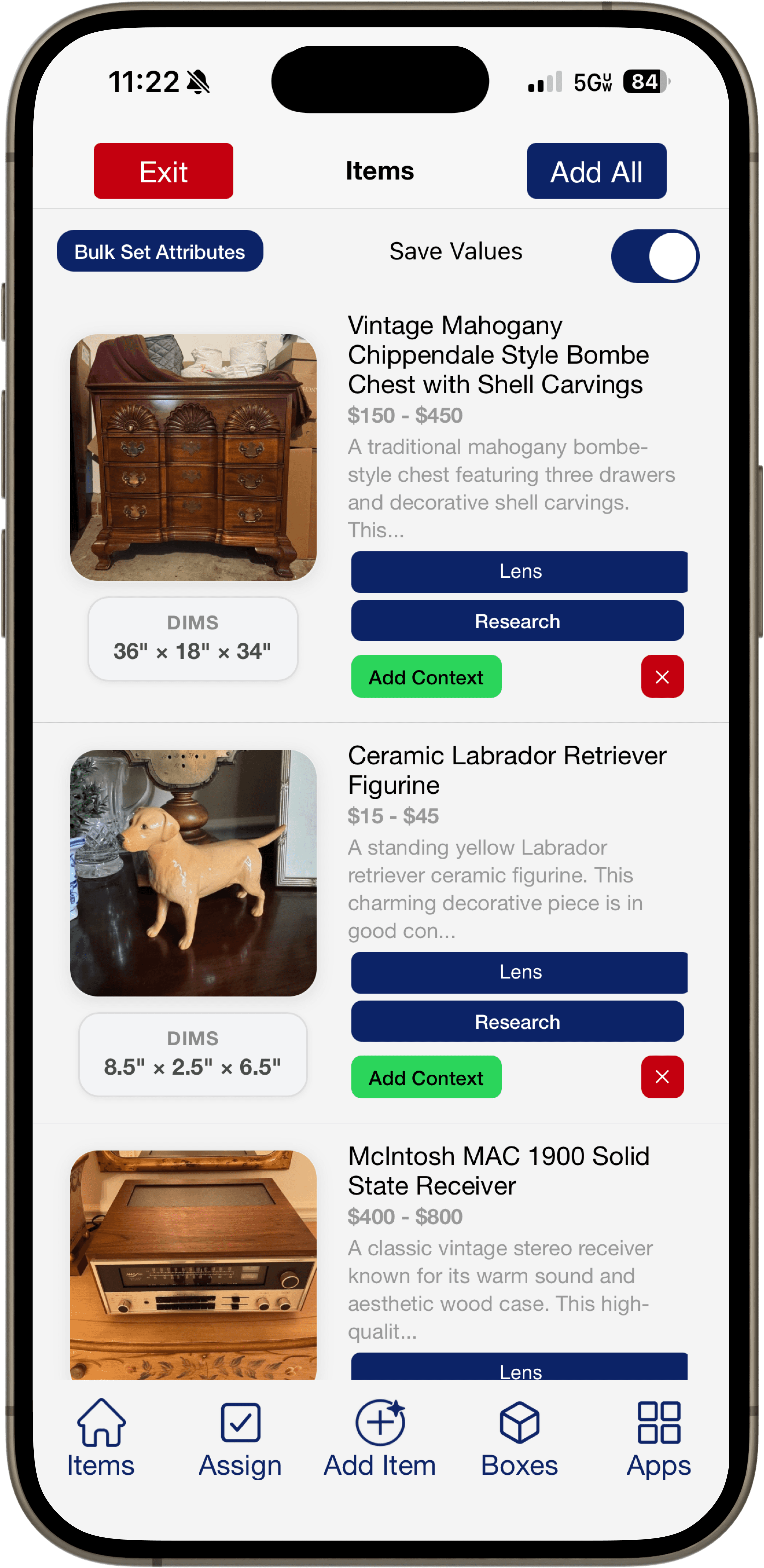
Price With Confidence, Not Guesswork
SaveOr's AI reviews each photo and gives you an instant estimated value based on comparable listings — so you never underprice a hidden gem or waste time pricing something worthless.
Instant AI value estimates for every item
Spot high-value pieces before you list anything
Avoid the discount table for things worth real money
Price With Confidence, Not Guesswork
SaveOr's AI reviews each photo and gives you an instant estimated value based on comparable listings — so you never underprice a hidden gem or waste time pricing something worthless.
Instant AI value estimates for every item
Spot high-value pieces before you list anything
Avoid the discount table for things worth real money
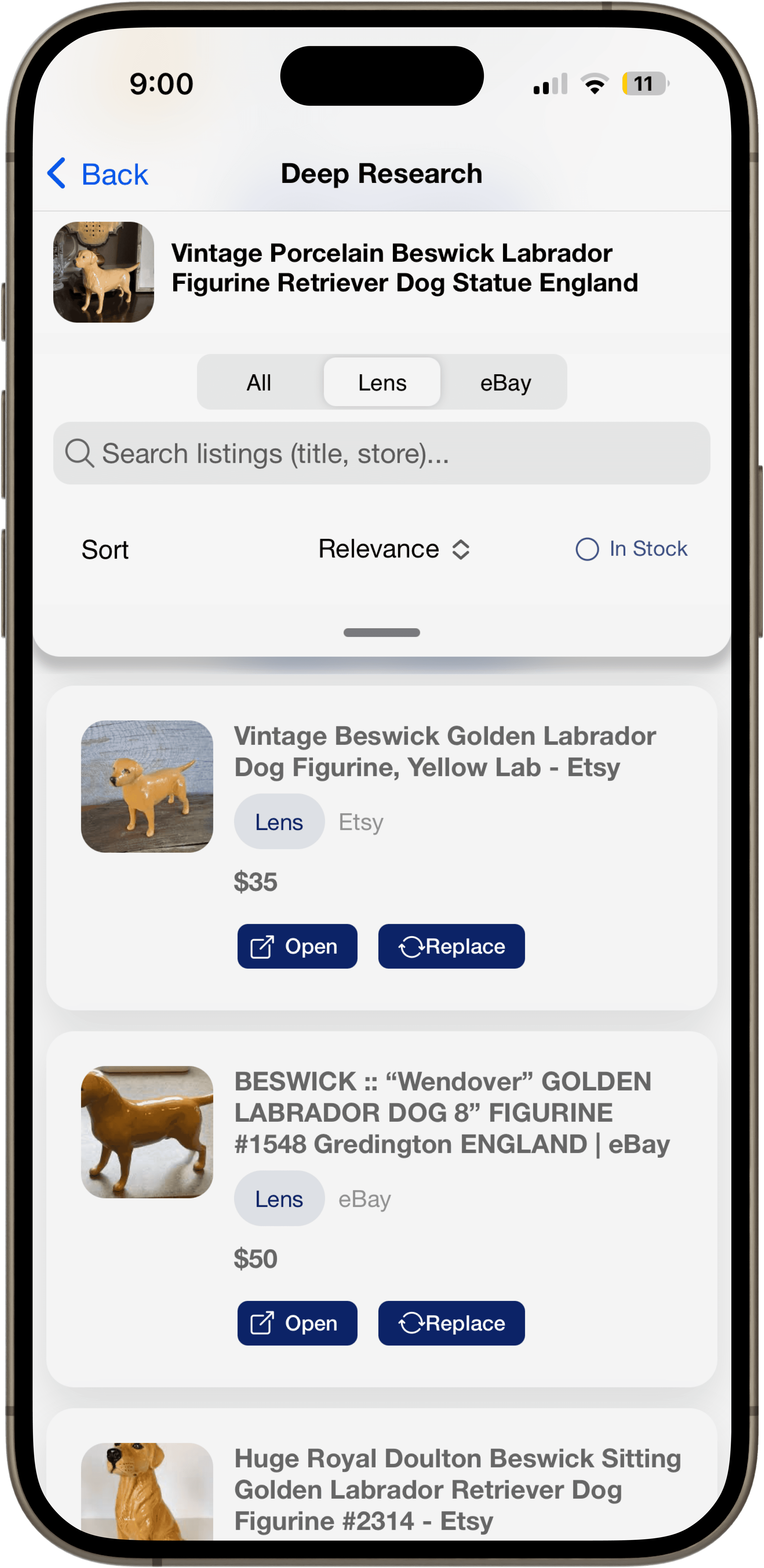
Know Where Each Item Should Go
Tag items by destination — sell, donate, gift to family, or estate sale — so higher-value pieces go to the right marketplace or specialist instead of getting lumped in with everything else.
Tag items as sell, donate, gift, or estate sale
Export organized lists for marketplaces or sale partners
Keep family in the loop before anything is sold
Know Where Each Item Should Go
Tag items by destination — sell, donate, gift to family, or estate sale — so higher-value pieces go to the right marketplace or specialist instead of getting lumped in with everything else.
Tag items as sell, donate, gift, or estate sale
Export organized lists for marketplaces or sale partners
Keep family in the loop before anything is sold
Related
Browse the topic hubs →
Frequently Asked Questions
Find answers to the most common questions about using our app on your mobile device.
How do I know what my stuff is actually worth before selling it?
Where's the best place to sell used items?
Should I hire an estate sale company or sell things myself?
How much should I expect to lose to fees when selling online?
Is it worth photographing items I'm not sure I'll sell?
Know what you have. Know what to do with it.
SaveOr catalogs your belongings with AI, estimates what they’re worth, and helps you decide what to keep, sell, donate, or pass on.
