How to Get Rid of Unwanted Stuff (Without Losing Money or Making a Mess)
Quick Answer
The fastest way to get rid of unwanted stuff is to inventory everything first, tag each item as keep, sell, donate, gift, or discard, then work through those categories in order — starting with anything you’d regret tossing without checking its value.
Start With a Full Inventory, Not a Trash Bag
Most decluttering projects fail because people start moving things before they know what they actually have. Walk through each room first and photograph everything you’re considering getting rid of. SaveOr’s AI catalogs each item automatically as you go, so you end up with a complete, organized list instead of a pile of guesses.
Sort Everything Into Five Categories
Once your inventory exists, tag every item as Keep, Sell, Donate, Gift, or Discard. Doing this digitally, before touching a single object, removes most of the emotional overwhelm that makes decluttering drag on for weeks instead of days.
Know What’s Actually Worth Money Before You Toss It
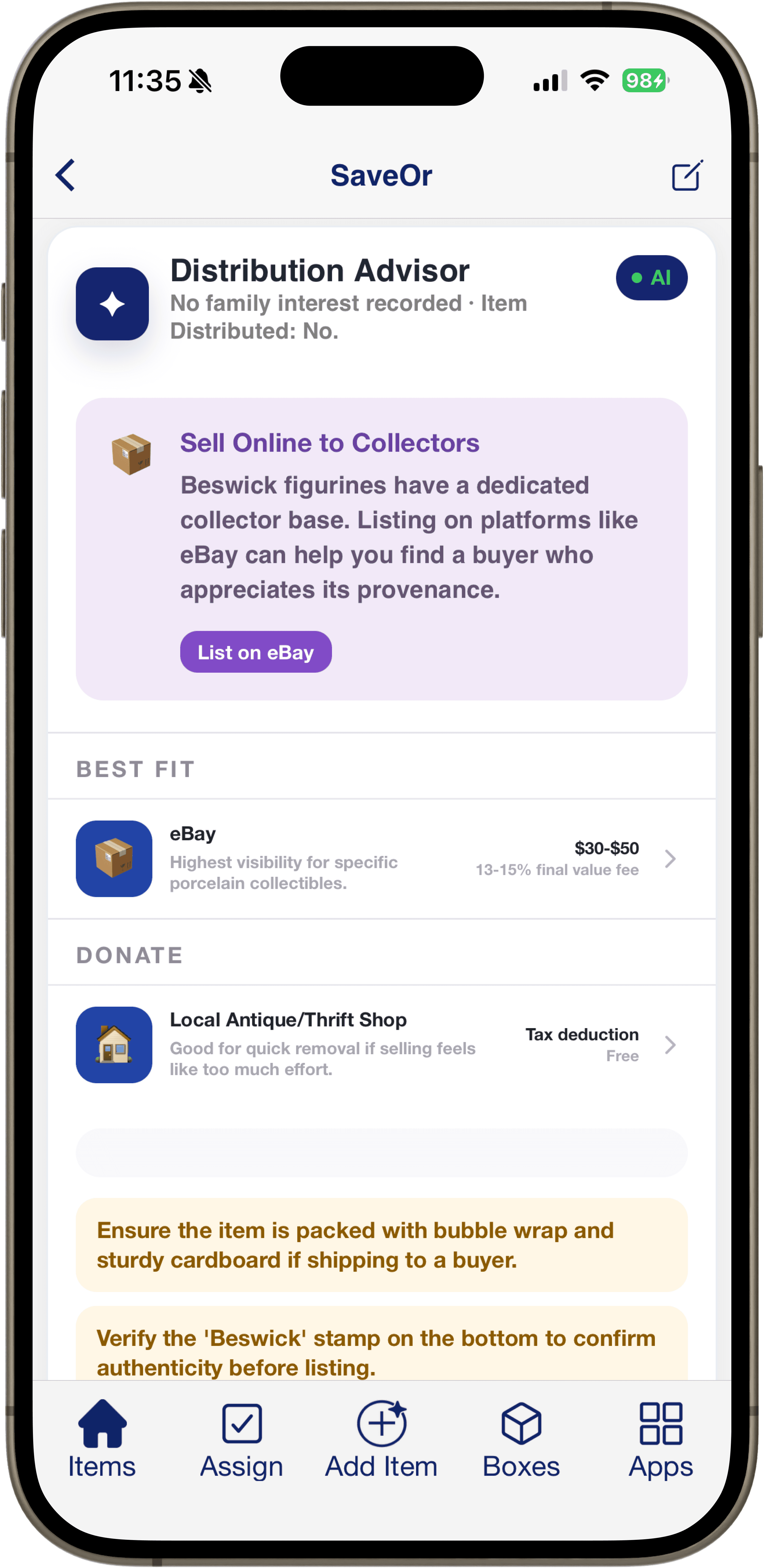
It’s easy to donate or discard something valuable simply because you don’t recognize it as valuable. Before anything leaves the house, get a quick AI value estimate on anything you’re unsure about — furniture, electronics, collectibles, and vintage items are the most commonly under-valued.
Let Family or Roommates Weigh In First
If you share a home, or you’re clearing out a space that affects other people, share the inventory before anything is removed. This is especially important when clearing a shared or inherited home — see our guide on millennial inheritance for how to divide belongings fairly among siblings and heirs.
Work the Categories in the Right Order
Handle Sell items first since they’re the most time-sensitive, then Donate, then Gift, then Discard last. If you’re getting rid of stuff as part of a larger move to a smaller home, our downsizing guide walks through the full process room by room.
Build a Room-by-Room Route
Choose a starting point and move through the home in a consistent direction. Photograph shelves, closets, storage areas, and the backs of rooms—not only the obvious furniture. A quick first pass is for recording what exists, not making every decision on the spot. Add a note when an item needs another person’s input or a closer look.
Set aside anything that needs special handling before it gets mixed into general discard piles. That can include personal papers, medication, batteries, electronics, and items with private information. Check local guidance for donation, recycling, and disposal requirements rather than assuming every item belongs in ordinary trash.
Give Every Category a Realistic Exit Plan
A tag is most useful when it leads to a next action. For donations, check what the organization accepts and when it can receive them; for gifts, confirm the intended recipient and a pickup date. For items to sell, capture condition, measurements, included parts, and a few clear photos while the details are in front of you.
Keep a short list of items that have not moved yet. If a listing gets no interest, revisit the price, photos, or channel before spending more time on it. If an item is not worth the effort to sell, bundling it with similar pieces or donating it may be the more practical choice.
Make Space for Shared and Sentimental Decisions
When a home is shared or inherited, pause before removing anything that might matter to someone else. Share the inventory and give people a clear window to flag items they hope to keep. A common list makes it easier to resolve duplicate requests calmly and keeps a fast clean-out from turning into a disagreement later.
For sentimental belongings, separate the conversation about meaning from the question of resale value. A handwritten note, family photo, or well-used tool may matter more to someone than its price would suggest. Record who wants each item and agree on a simple way to handle overlaps before anything leaves the home.
Finish With a Small, Visible Next Step
Avoid treating the whole house as one enormous task. Pick one room, make its inventory, and choose the next action for each item. Keep donation appointments, sale pickups, and disposal runs on a short checklist, then mark them complete as they happen. A visible record of what is finished—and what still needs a decision—makes it easier to keep going without redoing work.
Getting rid of higher-value items? Read our companion guide: How to Sell Unwanted Stuff.
Clearing out a home you’ve inherited with siblings? Read How to Fairly Divide an Estate Among Siblings first.
Know What It's Worth Before It's Gone
Photograph anything you're unsure about and SaveOr's AI instantly suggests a name, category, and estimated value — so nothing valuable ends up in a donation pile or a dumpster by accident.
Snap a photo and get an instant AI value estimate
Spot high-value pieces before you decide their fate
Avoid guessing what's trash and what's treasure
Decide Who Gets What, Without the Drama
Tag every item as keep, sell, donate, gift, or discard, then invite family or roommates to view the list and weigh in — so decisions get made together, not in an argument over a box in the garage.
Tag items across five clear categories
Invite others to view and comment before anything moves
Keep a record of who agreed to what
Decide Who Gets What, Without the Drama
Tag every item as keep, sell, donate, gift, or discard, then invite family or roommates to view the list and weigh in — so decisions get made together, not in an argument over a box in the garage.
Tag items across five clear categories
Invite others to view and comment before anything moves
Keep a record of who agreed to what
Related
Browse the topic hubs →
Frequently Asked Questions
Find answers to the most common questions about using our app on your mobile device.
What's the fastest way to declutter a whole house?
How do I know what's worth selling versus donating?
What should I do with items my family might want?
Do I need to get rid of everything at once?
What if I'm clearing out a home after a move or a loss?
Know what you have. Know what to do with it.
SaveOr catalogs your belongings with AI, estimates what they’re worth, and helps you decide what to keep, sell, donate, or pass on.
